
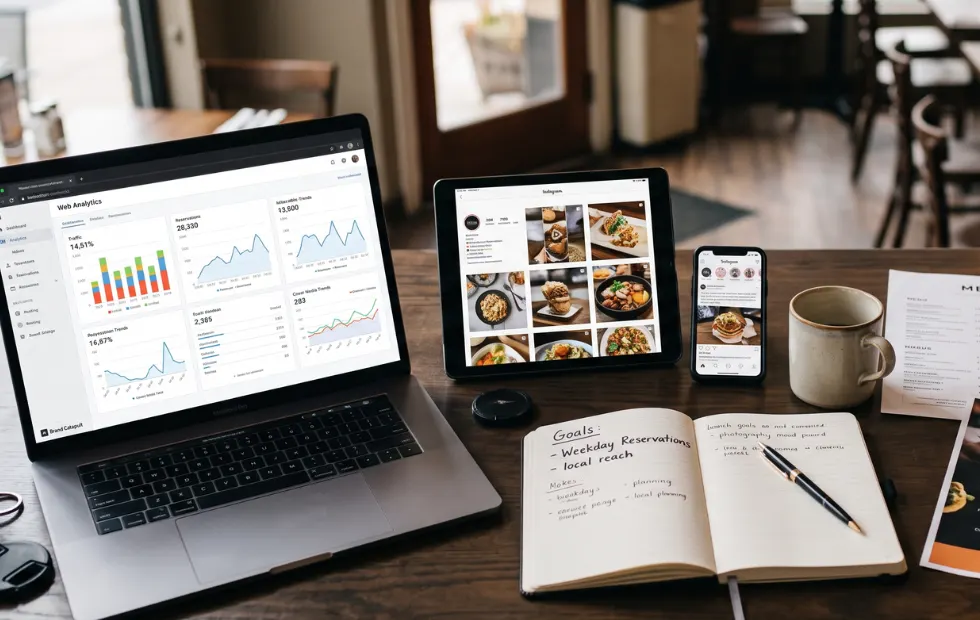
How to Choose the Best Restaurant Marketing Agency for Your Business
Running a restaurant involves far more than serving excellent food. Your team must create a memorable guest experience, manage costs, maintain service quality and keep tables occupied across different days and time slots. Marketing has to support all of those realities. A restaurant marketing agency can help build awareness, strengthen your online presence and turn interest into reservations, visits or orders. But choosing the right partner takes more than comparing follower counts or the number of posts included in a package.
The best restaurant marketing agency for one business may not be the best fit for another. A neighbourhood café may need local discovery and repeat visits, while a premium dining room may need sharper positioning, strong visual storytelling and carefully qualified reservation enquiries. A delivery-first brand will have different priorities again. This guide explains what to look for, which services matter, what to ask before signing and how to measure whether marketing is helping the business.
Start With Clear Restaurant Marketing Goals
- Before contacting agencies, identify the business result you need. “More social media engagement” is not a complete objective unless you know why engagement matters. A new restaurant may need local awareness before opening; an established venue may need more weekday reservations; a café may want more visits during slow afternoon hours; and a multi-outlet group may need consistent brand communication across locations. The agency should translate the business challenge into a measurable marketing objective.
- Write down your current position and the change you want to see. Useful measures include reservation enquiries, calls, direction requests, website bookings, cost per qualified lead, online orders, repeat-customer rate and revenue from trackable campaigns. Not every walk-in can be attributed precisely to an online ad, so combine platform data with reservation records, point-of-sale trends, booking questions and simple customer surveys. Agree on the main KPI before media budgets are spent.
Match the strategy to your restaurant format
- A fine-dining restaurant may benefit from chef-led storytelling, menu launches, creator experiences and occasion-based reservation campaigns.
- A quick-service restaurant may focus on offer communication, convenience, location visibility and delivery conversion.
- A café may highlight ambience, signature beverages, work-friendly seating and seasonal menu items.
- A hotel restaurant may target residents, corporate diners, celebrations and staycation guests.
- The agency should ask about average spend, capacity, peak and off-peak periods, catchment area, signature dishes and customer feedback before recommending channels.
Check Whether the Agency Understands Hospitality
- Restaurant marketing has its own operating pressures. Menus change, dishes sell out, events depend on specific dates, table capacity is limited and customer decisions are influenced by location, ambience, service, price and occasion. An agency with hospitality experience is more likely to ask about covers, table turn, average order value, reservation windows, repeat visits, food delivery platforms and the difference between a busy Saturday and a quiet Tuesday.
- Ask the agency to explain how it would market your specific restaurant—not a generic business. A useful answer should connect audience needs to an idea, channel, offer or experience. For example, if weekday lunch is slow, the plan might feature a relevant lunch menu, local corporate audiences and reservation-focused content rather than simply boosting a broad awareness post.
- Request examples of past work where the agency can share them, and ask what the team learned. Strong partners can explain decisions, not only display attractive creatives.
Evaluate the Services You Actually Need
- Restaurant marketing can include local SEO, Google Business Profile management, social media strategy, paid campaigns, food photography, short-form video, influencer collaborations, website improvements, public relations and launch events. A full-service scope can be convenient, but buying every service is not automatically the right move.
- Start with the customer journey: how will people discover the restaurant, decide it suits their needs, make a reservation or order, and have a reason to return? Invest first in the gaps that interrupt that journey.
Local SEO and Google Business Profile
- For a restaurant that depends on nearby diners, the business profile, website location pages, opening hours, menu information, photos and review responses are foundational. The profile should accurately represent the business and make it easy for customers to call, get directions or visit the website.
- Local visibility depends on multiple factors and no agency can honestly guarantee a particular Google Maps ranking. Ask for a process covering profile accuracy, review management, relevant website content and performance monitoring.
Social media, creative production and paid advertising
- Social media should communicate why the restaurant is worth visiting, not just announce that it exists. Content may feature signature dishes, the chef’s point of view, atmosphere, team stories, guest occasions, menu details and upcoming experiences.
- Paid advertising can extend selected messages to relevant audiences or capture existing search demand.
- Ask who creates the content, how shoots are planned, how many revisions are included, whether media spend is separate from management fees and how campaigns are adjusted when results change.
Look Beyond Followers and Impressions
- Reach, views and engagement can help diagnose content performance, but they do not prove that the restaurant gained profitable business. A large number of video views is not equivalent to reservations, and a cheaper lead is not necessarily a better lead if the person is outside the catchment area or never confirms a booking. A credible agency reports the metrics that align with the agreed objective and clearly explains what can and cannot be attributed.
- For awareness, review relevant reach, frequency, video retention, branded search trends and local audience response.
- For reservation campaigns, review qualified enquiries, response time, confirmed bookings and cost per confirmed booking where tracking permits.
- For delivery-led campaigns, monitor orders, order value, conversion rate and cost of acquisition.
- Build a reporting rhythm that includes the numbers, what they mean, what was tested and the next action. A report should help the restaurant make a decision rather than simply prove that work happened.
Ask These Questions Before Hiring an Agency
- A short discovery meeting can reveal whether the agency has a structured process. Ask who will manage the account day to day and who owns strategy.
- Confirm how often reporting and planning meetings happen, who approves content, what access the agency needs, and how urgent menu or event updates are handled.
- Ask whether campaign accounts, pixel or conversion data, creative files and analytics properties will remain accessible to your business. You should retain appropriate ownership and administrative access rather than depend on a vendor for every change.
- Discuss what is included and excluded in the fee. The proposal should separate professional fees from ad spend, taxes, influencer costs, production expenses, talent, travel and third-party tools where relevant.
- Ask how scope changes are priced and what happens if a campaign underperforms. No professional can promise a fixed number of walk-ins from social media advertising alone because demand, service, availability, price, weather, competition and sales follow-up also influence outcomes. The agency should be comfortable explaining those variables.
Common Red Flags to Avoid
- Be cautious if an agency guarantees viral content, a specific number of restaurant walk-ins or a first-place Google ranking without explaining assumptions.
- Other warning signs include buying followers, reporting only vanity metrics, refusing to show how ad budgets are spent, using the same plan for every restaurant, making unsupported claims about competitors, or treating every problem as a reason to increase spending.
- Poor tracking and unclear account ownership can also make it difficult to understand what has worked.
- A low quote can be right for a narrow scope, but it may not cover the work your goals require. Likewise, an expensive quote is not automatically superior.
- Compare agencies on the quality of thinking, team experience, deliverables, transparency, creative standards, reporting and fit with your operating requirements. Ask each agency to explain its assumptions so that you are comparing equivalent scopes rather than just totals.
Build a Practical Restaurant Marketing Measurement Plan
- Agree on a simple baseline before launch. Record existing profile activity, website visits, calls, direction requests, reservation enquiries, confirmed bookings and sales data that the business can reliably access.
- Use tagged campaign links, consistent naming conventions and conversion tracking where appropriate.
- Train the front-of-house or booking team to record enquiry sources when practical. These steps will not make attribution perfect, but they reduce guesswork and help the team see directional patterns.
- Review results at a frequency that matches the campaign. Short-term promotions may need daily checks on spend, creative delivery and lead quality, while SEO and broader brand building require a longer view.
- Do not change several major variables every day; allow enough data to identify a pattern, then test a clear hypothesis.
- Compare performance with business realities such as table availability, staffing, menu margins and service capacity. Marketing should attract the right demand at a level the restaurant can fulfil.
A Simple Checklist for Choosing the Right Partner
- Before signing, confirm that the agency understands your restaurant’s positioning, customer segments, catchment area, menu economics and operational constraints.
- The proposal should state objectives, audiences, channels, deliverables, timeline, responsibilities, reporting measures and budget assumptions.
- Check the approval process and confirm access to advertising accounts, website analytics, business profiles and creative assets.
- Ask how the agency will learn from results and adapt the plan rather than treating the first media plan as permanent.
- Test the working relationship: Are questions answered clearly? Does the agency challenge an unrealistic brief constructively? Can the team explain technical decisions in language your operators understand? Does it listen when the restaurant shares feedback from guests and staff? Good marketing depends on a steady exchange of information between the agency and the business.
Frequently Asked Questions
How much does a restaurant marketing agency cost?
- Pricing depends on the mix of strategy, content, photography, social media management, SEO, advertising management and campaign scale.
- Ask for a written scope and separate agency fees from advertising spend and production costs.
- Compare deliverables and accountability rather than selecting the lowest headline number.
How long does restaurant marketing take to work?
- The timeframe depends on the objective and channel. Paid campaigns can produce early signals soon after launch, but those signals need to be checked for relevance and business impact.
- Local SEO, reputation building and brand familiarity generally require consistent work over a longer period.
- A realistic plan sets near-term learning milestones alongside longer-term goals.
Should a restaurant hire one full-service agency or different specialists?
- One partner can help coordinate strategy, creative and media, while specialists may be useful when a requirement is highly technical or occasional.
- Choose the model that gives you clear accountability, strong expertise and manageable communication—not simply the largest list of services.
Conclusion: Choose a Partner That Understands the Business Behind the Brand
The best restaurant marketing agency is the one that connects customer insight, compelling creative, suitable media and measurable business goals. Start by defining the result you need, then evaluate hospitality understanding, service quality, measurement, transparency and working style. A restaurant’s growth is influenced by food, service, pricing, location and capacity as well as marketing, so the strongest partnership respects the whole operation.
Brand Catapult works across digital marketing, strategy and photography. Explore digital marketing services, strategy and consulting and food photography, then discuss the objectives and scope that fit your restaurant.